Diary of a Pastors Wife
An honest reflection of what couples in Ministry experience daily – the good, bad and the downright wacky. It demonstrates their undying love, commitment and sacrifice to the Ministry despite all odds.
Why Does Pastor Need That Car? (and 4 Other Questions We May be Too Afraid to Ask out Loud)

There are very few roles which everyone has an opinion about. The Pastor is one of them.
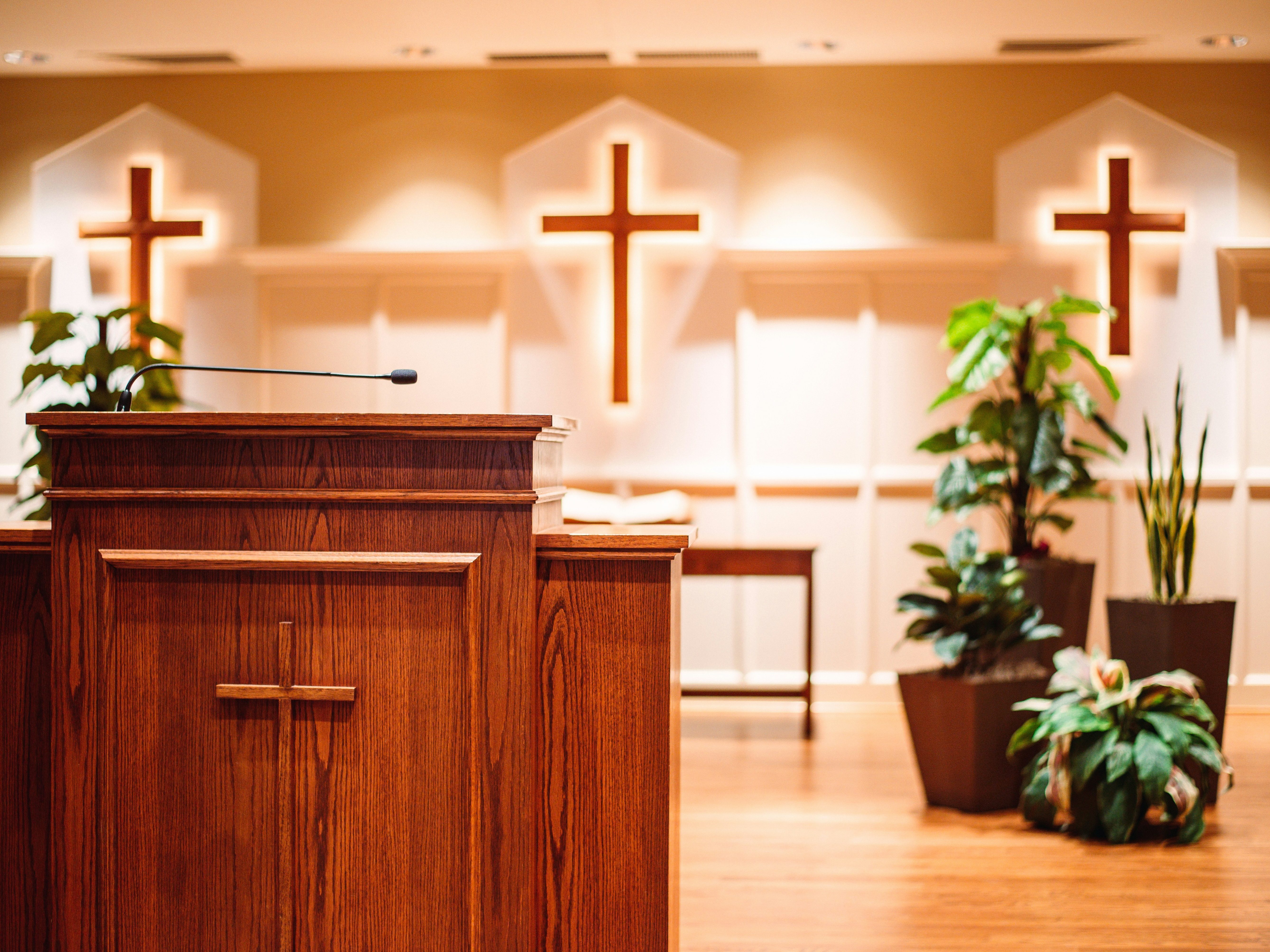
Welcome to life behind the pulpit.
The sermon was too long. The sermon was too short. Pastor didn’t greet me. Pastor greeted them for longer than he greeted me. Pastor is always busy. Why must Pastor go on holiday? Pastor talks about money. Pastor doesn’t visit enough. Pastor’s children should know better. Pastor’s wife looks unfriendly.
Then Pastor arrives in a decent car and somebody notices.
Pastor moves into a beautiful home and somebody calculates what it must have cost.
Pastor takes a holiday and suddenly people are wondering whether their tithe paid for the flight.
And somewhere, probably before lunch on Sunday, somebody has already said:
“Pastor should have…”
I can smile about some of these things now, but living on the other side of the pulpit has given me a very different perspective.
Growing up, I genuinely thought pastors had quite a nice arrangement. Work on Sunday, pray for a few people during the week, perhaps conduct a wedding or funeral, and then have plenty of time for everything else. Then I married one. How wrong I was!
Of course, there are pastors who have abused their positions. There are those who have manipulated people, mishandled money, misused spiritual authority and caused tremendous hurt. They must be held accountable. Being called “Pastor” should never place anyone above correction, transparency or the law.
Scripture itself places a high standard on spiritual leadership. We see this is in 1 Timothy 3:2–3 and 1 Peter 5:2–3. So this is not a defence of greed or financial abuse.
But neither should we make poverty a qualification for ministry.
I am writing about the thousands of sincere men and women quietly serving people every week. The ones teaching & preaching the Word week after week, answering calls nobody knows about, counselling marriages nobody knows are falling apart, sitting beside hospital beds, burying loved ones, praying through the night and carrying information on their shoulders that they can never repeat. In addition to these pastoral tasks, they have to see to building maintenance, renovations, oversee all the different ministry teams and also study the Word of the Lord.
So perhaps it is time we answered a few of the things pastors are often criticised for.
“Why is Pastor always talking about money?”

This is probably at the top of the list. The minute a pastor teaches about giving or generosity, somebody somewhere starts shifting uncomfortably in their seat.
“There we go again. Church just wants our money.”
And yes, financial manipulation in the church is wrong. Nobody should be coerced, threatened or made to believe that God’s blessing can be bought.
But Scripture also doesn’t pretend that ministry operates without financial provision. The Apostle Paul encouraged the church to prepare their offerings in 1 Corinthians 16:1-2a.
Like our own homes, churches have bills. From electricity to rent, insurance, staff, equipment, security, outreach programmes, children’s ministry & youth ministry. There are families who need food, people who need counselling, funeral support, emergency accommodation, transport, mission work, and of course buildings that develop expensive problems at the most inconvenient times.
Ministry may be spiritual, but it operates in a very physical world.
What I find interesting is how easily we can expect the church to be there when we need something.
When a marriage is falling apart: “Pastor we need counselling.”
When somebody loses a job: “Can the church help with our water and electricity bill?”
When there is a funeral: “Is the church helping with costs?”
When we are getting married: “Please officiate the wedding Pastor.”
When a family cannot afford groceries: “Can the church provide food parcels?”
When our child needs advice or direction: “Can we speak to Pastor?”
When we have a job interview: “Please pray for us.”
When we are in hospital: “Please come pray for us.”
When we buy a new house: “Please come bless our house.”
Yes, the church should be there because we are a family and a community that supports one another. That is part of what the Church is called to do.
Galatians 6:2 tells us to “carry each other’s burdens.”
James 1:27 reminds us that pure religion includes caring for people widow and in vulnerable circumstances.
But here is an uncomfortable question:
How much do some of the people criticising the church for teaching about money actually contribute towards making any of this possible?
We cannot continually expect a church to function like an emergency service while contributing nothing towards sustaining it.
2 Corinthians 9:7 says each person should give what they have decided in their heart to give – not reluctantly or under compulsion.
Sadly, most of those who quote this don’t financially support the work of the ministry, yet enjoy the benefits of the ministry.
As children of God, giving should be part of our honour to God. It shows that we understand that everything we are and all that we have comes from Him.
“Why does Pastor need that car?”

This one fascinates me.
Nobody asks why the doctor drives a nice car.
Nobody is offended when the lawyer upgrades theirs.
We don’t stand outside an accountant’s house discussing whether their salary really justified the BMW.
But when it is a Pastor, suddenly we become forensic accountants.
Now, should a pastor live recklessly, accumulating luxury through the manipulation of vulnerable people? Absolutely not!
But does being a pastor mean you are required to drive the oldest car in the church parking lot to prove your humility? Also, no.
A reliable vehicle is not an outrageous requirement for someone who travels constantly between church, hospitals, homes, funerals, counselling appointments, meetings, conferences and emergencies, often at night.
There are pastors who drive thousands of kilometers in the course of ministry.
If a pastor has legitimately worked, saved, invested or been blessed, why must it automatically become suspicious?
1 Timothy 6:17 does not condemn having resources. It warns against arrogance and putting our hope in wealth.
The question should not simply be, “Why does Pastor need that car?” but rather, “Is it appropriate, honestly acquired and fit for the demands of the work?”
A good vehicle is not proof of greed, just as an old one is not proof of humility. Character, stewardship and integrity matter far more than the badge on the bonnet.
“Why should the church honour the Pastor? Shouldn’t he just get a job?”

This question always makes me pause.
Because pastoring is not a job it is a HIGH calling.
It is a calling that comes with immense costs.
Preparing sermons takes time – Pastors spend days, weeks, even months to prepare a single sermon – not from ChatGPT, but from the Word of God inspired by the Holy Spirit. Counselling takes time. Mentoring leaders takes time. Visiting hospitals, meeting families, conducting funerals, equipping people, overseeing staff, planning services, dealing with crises, studying Scripture, managing church responsibilities and simply being available to people, all take time.
Much of that “work” happens when nobody is watching.
So when a church honours their Pastor, it is not just paying him to “preach for an hour on Sunday,” it is declaring: “blessed is he who comes in the name of the Lord.” The Church by their honour to the Pastor obeys the scriptures in 1 Timothy 5:17: “Let the elders that rule well be counted worthy of double honour, especially they who labour in the word and doctrine.” The Apostle Paul is highlighting that those who labour in doctrine must honoured. To honour is to fix a value upon.
It is enabling him to give his time and attention to the work of ministry.
Scripture supports this very clearly.
1 Corinthians 9:14 says, “Even so the Lord has commanded that those who preach the gospel should live from the gospel.”
1 Timothy 5:17–18 “You shall not muzzle an ox while it treads out the grain,” and, “The labourer is worthy of his wages.”
Even Galatians 6:6 says that the one who receives instruction in the Word should share in all good things with the one who teaches.
Of course, some pastors do have other jobs. They are often called bi-vocational pastors, and there is nothing wrong with that. Paul himself worked as a tentmaker at certain points in his ministry but as the demands of ministry grew, many of the Churches (including the Macedonians) recognised that he needed to give himself to the Word and Prayer. Their generosity enabled Paul to devote himself wholly to the Body of Christ and much of the Pauline Epistles are as a result of this devotion.
If you believe that a Pastor must work a full-time secular job and then somehow pastor a church in whatever hours are left over, think about what you are really asking:
Work eight or nine hours a day.
Come home.
Then prepare sermons.
Counsel couples struggling in their marriages.
Answer calls.
Visit hospitals.
Lead meetings.
Take leave to conduct weddings and funerals.
Pray for people.
Deal with emergencies.
Lead the church.
And somehow still be a present spouse or parent.
For some pastors and smaller churches, that may be the reality for a season, especially if you are pioneering a church. Many carry this load faithfully but as the church grows, the pastor will need to give himself wholly to the work of the ministry or he will never be able to shepherd the flock giving them the time and care they need.
If a church has the ability to support its Pastor, why would anyone deliberately want to make ministry harder?
Again, we apply a very different standard elsewhere. A doctor may feel called to medicine, but we still pay the consultation fee. A counsellor may genuinely feel called to helping broken people, yet we understand that their expertise, preparation and time have value.
Why should spiritual work suddenly have none?
Perhaps part of the problem is that so much pastoral care is given freely that we forget what it costs the person giving it.
You may receive an hour of counselling without an invoice. You may call the Pastor for advice without paying a consultation fee. Your family may receive prayer, guidance, monetary support and hours of pastoral care without ever seeing a bill.
But just because it’s free to you does not mean it cost the Pastor nothing.
It costs time, fuel, emotional capacity, devotional time, and moments with his own family. We often forget that Pastors are also spouses and parents – they too need to do homework with their children, attend their concerts and sporting events – and dare I say, even help wash the dishes. They also pay school fees, utility bills and buy groceries.
So perhaps the question is not:
“Why should the church honour the Pastor?”
Perhaps it should be:
“If we expect someone to devote their life to caring for the church which includes our family, why would we expect them to do it without provision?”
Most of the pastors I know will serve Gods people freely and voluntarily. They don’t demand or feel entitled to anything. This though does not in any way mean that the church should not give honour where honour is due, as the Bible declares.
“Pastor didn’t greet me on Sunday.”

This can hurt. Especially when you love and respect your Pastor.
You walk past expecting a warm greeting and he seems distracted, or Sunday comes and goes and you realise you never actually spoke. But before concluding that Pastor has suddenly developed an issue with you, consider what Sunday morning may look like from his side.
He may be thinking about the sermon. Someone may have just whispered terrible news into his ear. The microphone may not be working. The worship team may be waiting for direction. A family may need urgent prayer. A visitor may need attention…and somebody is probably asking where the extension cord is.
My husband and I actually make a conscious effort to walk around and greet as many people as we possibly can. We love seeing our church family. We get excited when we see people we haven’t seen for a while. We want to know how they are doing, how the children are, whether the job interview went well or whether the prayer request has been answered.
But here is something I have also noticed over the years: very few people actually wait to greet the Pastor. Sometimes people leave the service quickly and then later say, “Pastor didn’t greet me.” I find myself wondering: Did you greet Pastor?
There is something as simple as good etiquette here. If church is genuinely a family, surely greeting shouldn’t only be the Pastor’s responsibility?
When you arrive at a family gathering, you don’t normally sit in the corner waiting for the head of the family to make their way across the room before you acknowledge anybody. You walk in, say hello, greet people and ask how they are. Why should church be any different?
Romans 16:16 repeatedly reflects this culture in the early church: “Greet one another…” Paul spends significant portions of his letters sending greetings to people by name. There was relationship, recognition, and community. Romans 12:10 tells us, “Be devoted to one another in love. Honour one another above yourselves.”
Notice the words one another. Church was never intended to be a room full of people waiting to be personally acknowledged by one person at the front. We are supposed to notice each other – we’re family after all!
So perhaps instead of standing back and thinking, “Let’s see whether Pastor greets me today,” walk over and say “Good morning, Pastor!” Shake his hand. Give him a hug if that is your relationship, and ask how he is doing. While you’re at it, greet the person sitting beside you, hug the elderly person who arrived alone, welcome the new family standing awkwardly at the entrance, say hello to the person you’ve seen for six months but whose name you still don’t know.
Sometimes we put enormous pressure on the Pastor to create the feeling of family when all of us are responsible for creating it. And yes, there will still be Sundays when Pastor misses you, but give grace before giving meaning to something that may have meant nothing at all.
So next Sunday, don’t just ask: “Did Pastor greet me?” How about asking: “Who did I make feel seen today?” That sounds much more like family.
Perhaps that is where I want to leave Part 1. Pastors are not above criticism. They must be accountable, transparent and willing to be corrected when they get things wrong. But perhaps we could also become a little slower to criticise what we don’t fully understand. Before we ask why Pastor drives that car, perhaps we should know the story behind it. Before we ask why the church pays Pastor, perhaps we should consider what pastoring actually requires. Before we complain that Pastor didn’t greet us, perhaps we should ask whether we walked over and greeted him – or anybody else.
And before we ask, “What is the church doing for me?” perhaps every now and then we should ask: “What am I doing to help make this church the family I want it to be?”

Church was never meant to be a place where a handful of people serve while everybody else watches, consumes and critiques.
1 Corinthians 12:27 says, “Now you are the body of Christ, and each one of you is a part of it.”
Each one of us have a part to play. Healthy churches are not built by perfect pastors. They are built when pastors and the congregation carry the work, the responsibility and one another together, with love.
There are still a few questions we haven’t answered:
Why does Pastor need a holiday?
Why doesn’t Pastor visit anymore?
Why is Pastor closer to some people than others?
Why doesn’t Pastor tell us everything?
We’ll talk about those in Part 2!


 Diary of a Pastors Wife
Recent Comments