Diary of a Pastors Wife
An honest reflection of what couples in Ministry experience daily – the good, bad and the downright wacky. It demonstrates their undying love, commitment and sacrifice to the Ministry despite all odds.
The Mental Load of Staying Alive as a Woman in South Africa
Over the past few days, as the discovery of the bodies of nine women in Gauteng has dominated the news and social media, one thought has stayed with me.
It is not something that will show up in a police statement or crime statistic, but it is something almost every woman will understand: the constant mental calculation that we do just to stay safe.

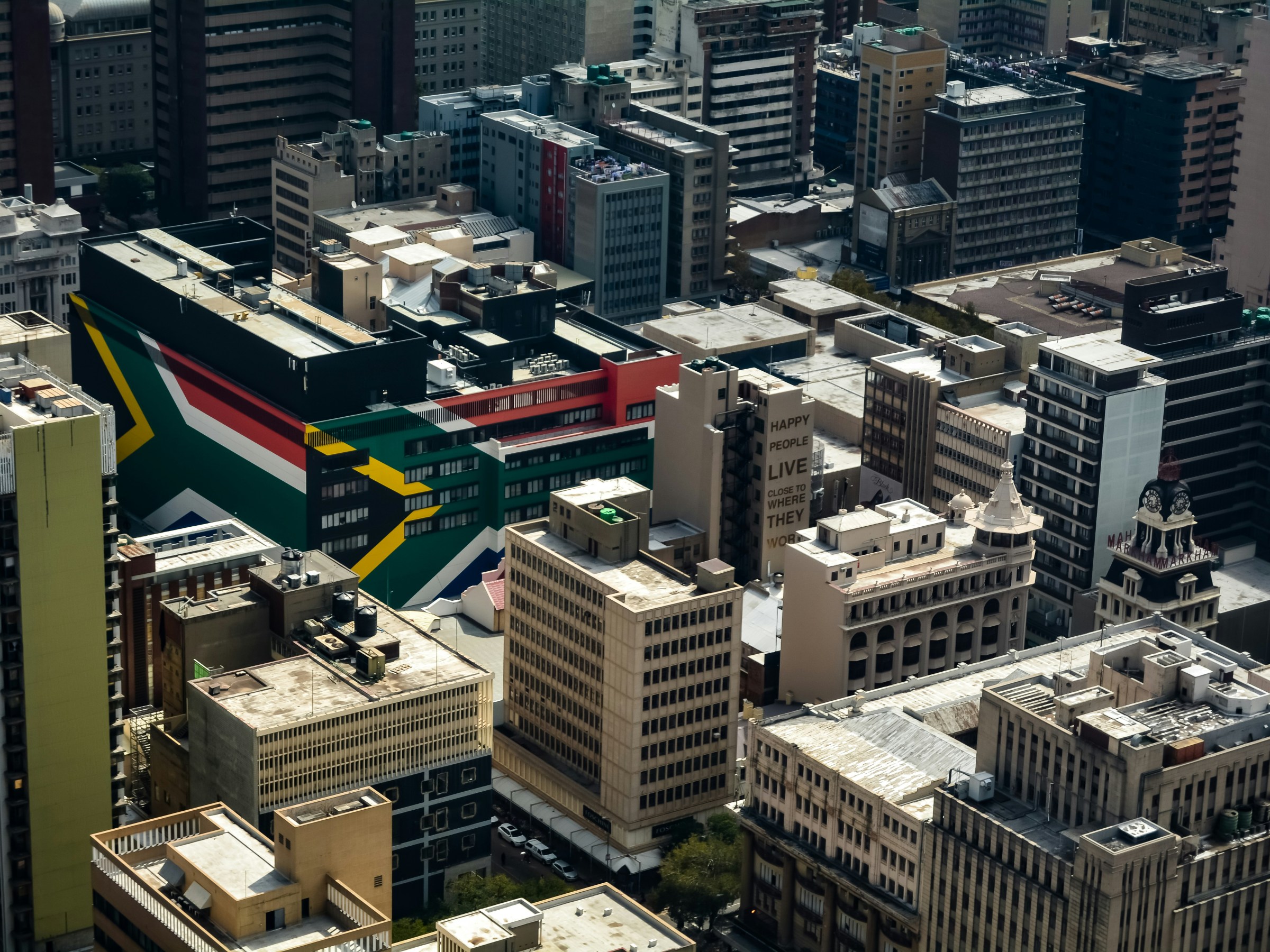
Illustration by Annie Spratt on Unsplash
I am not talking about situations that are obviously dangerous. I mean the ordinary things we do every day like walking to the car, going for a run, leaving work late, waiting for an Uber, stopping at a fuel station, walking from the taxi rank or simply getting home.
There are so many thoughts that go through my mind on an average day.
Is my phone properly charged? Have I told my husband where I am? Did I park in a safe spot? Are my car keys and jewellery out of sight? Who is walking behind me? Why is that car driving so slowly? Should I cross the road? Should I pretend to be on a phone call? Do I have enough petrol to avoid stopping somewhere unfamiliar? I recently bumped my car while reversing from an undercover parking lot in Johannesburg because my eyes were fixed on a man who suddenly ran behind the vehicle. I didn’t even hear the beeping of the parking sensor – my mind was already working on my survival plan for that moment.
This is what bothers me the most – being alert all the time just feels normal.
When we get into the car, there’s often that almost automatic message: I’m leaving now.
Then, later, another one follows: I’m home.
It has simply become part of the way we move through the world.
I have worked in newsrooms for many years. I have covered crime stories, heard horrific accounts of abuse and watched stories about women being brutally killed move through the news cycle again and again.
But sometimes a story lands differently. This one certainly has. Perhaps it is that photograph of Elizabeth Moselakgomo, smiling and so full of life, a woman who still had so much ahead of her. She was also a mother to an eight-year-old daughter, which makes the story feel painfully close.
The conversations women are having right now are not only about Elizabeth or the other women whose bodies have been found. They are also about ourselves, our daughters, our sisters, our friends, and about the ordinary things we do every day that come with an added mental load.
They are about the walk we decided not to do because it was getting dark, the parking space we avoided because it was too far from the entrance, the route we changed, the event we left early, the dinner with friends we turned down, or the moment we gripped our handbags a little tighter because someone was walking behind us.
It is remarkable when you stop and think about it.
A man may decide to go for a run by putting on his shoes and walking out the door. For many women though, there is another layer to that decision.
What time is it? Which route should I take? Should I wear earphones? Is there enough traffic around? Who knows where I am going? Is it safe to go alone? And sometimes, after doing all that mental arithmetic, the answer is simply that we will go tomorrow instead.
How many opportunities have we turned down because getting home at night would be unsafe?
How many students leave libraries before they are finished studying because they do not want to walk across campus in the dark?
How many young women stress about doing evening shifts because they have to use public transport to get home?
How many women have paid for an Uber they could not really afford just so they could feel safe?
We count crime statistics, but we rarely count the freedom lost around them. Then, inevitably, come the safety tips – women must not walk alone, women must share their locations, women must be aware of their surroundings, women must avoid certain areas, women must be careful.
Photo by Jacques Nel on Unsplash
When something happens to a woman, the questions arrive quickly.
Why was she walking there? Why was she alone? Why was she out so late? Why didn’t she take an Uber? What was she wearing? Did she tell anyone where she was going?
We interrogate the woman’s decisions as though somewhere in the sequence of events there was a perfect decision she could have made that would have guaranteed her safety.
There isn’t. You can do everything “right” and still not be safe.
I think about young girls growing up in this country and the rules they slowly inherit from us.
Don’t walk there! Don’t go alone. Call me when you arrive. Hold grandma’s hand. Stay in my sight. Watch your drink. Don’t trust strangers. Check the number plate. Send me your location.
As a mother receiving constant news alerts, my heart is always in my hand when my daughter is out of my sight. We don’t attend birthday parties in noisy, crowed venues for this precise reason. We once lost sight of our little girl while chatting to other parents at a party. It was 5 minutes of hell. My husband immediately flew up two flights of stairs towards the exit of the building. Meantime I tried to desperately communicate with the other children above the rowdy music to try to find her in the nooks and crannies of the activity centre. To our relief she was found. Never again. The mental stress is not healthy for any parent – or child!
What does it do to a little girl growing up believing that danger may be lurking around the corner?
Photo by Atul Pandey on Unsplash
This is why I don’t want this conversation to become another list of various ways women can “stay safe”. What we need is a much harder conversation about why women need the list in the first place.
We also need to move beyond outrage, because if all we do is post, protest, become angry and then wait for the next woman’s name to trend, we haven’t done enough.
There are things we can change. Other countries and cities have begun approaching women’s safety in a very different way. Instead of just asking, “What can women do to protect themselves?” they are also asking, “What must we change about the environment around them?”
In Delhi, India, women and community groups have participated in safety audits of streets, transport hubs, parks and other public spaces, identifying problems such as poor lighting, visibility and unsafe routes. The findings have been used to guide interventions including street lighting and police patrols.
In Papua New Guinea, women using markets and public transport were asked what made them feel unsafe. In response, authorities looked at lighting, shelters, sanitation, crowd management and transport services.
In the UK, StreetSafe allows people to anonymously flag public places where they feel unsafe and explain why. Police and local partners can use that information to identify problem areas, adjust patrols and make environmental improvements such as better lighting or CCTV.
Spain’s VioGén system brings information about gender-based violence cases together, assesses the level of risk facing a woman and links that assessment to monitoring and police protection. Its updated VioGén 2 system also allows information from different police, judicial and victim-support systems to be connected.
There is no magical programme we can import into South Africa that will suddenly make every woman safe. But these examples show us that we are not helpless.
Imagine if our councillors regularly walked through communities with the women who actually use those streets? Not at midday, surrounded by officials, but at the times women actually travel. Walk with the student leaving campus after an evening lecture. Walk with the young woman getting off a taxi at 9pm. Walk with the nurse coming off a late shift. Walk with the woman who has to cross an open field to reach her home.
Then listen when she says, “This is where my fear sets in.”
Perhaps the streetlight has not worked for months. The grass may be too high, or the taxi rank may be completely dark at night, and then, critically, somebody should be responsible for fixing it.
We could map those unsafe spaces. Universities could establish properly monitored safe routes between campuses and residences. Transport hubs could have clearly marked safe zones with lighting, CCTV cameras and people trained to respond when someone is in distress.
Municipalities could create a timeline for the repair of faulty streetlights in known high-risk areas, and for the repair of potholes. No-one wants to be stuck at a roadside in the dark from a punctured tyre.
There should be a reporting mechanism for women who use these spaces to help determine where interventions are needed.
South Africa does not have to reinvent everything. We can learn from what has worked elsewhere, adapt those ideas to our own communities and start with practical interventions.
We can also connect information better so that a woman at serious risk does not have to explain her entire story from the beginning every time she comes into contact with another element of the justice system.
These things may sound simple, but unfortunately even the simple things have become unreachable for millions of South Africans.
While we are fixing streets and systems, let’s intensify our efforts to educate our boys.
We cannot keep raising increasingly safety-conscious girls while having nowhere near the same intensity of conversation with boys about why girls need to be so careful.
We need to talk to boys about consent, rejection, anger, entitlement and what happens when someone says no.
We need to talk about how they speak about women when women are not in the room, what they do when one of their friends behaves badly towards a girl, and the difference between strength and control. These cannot be conversations we dust off once a year during 16 Days of Activism.
They have to begin at home, at school, on the sports field, in churches, in universities, in workplaces and among groups of men. Women’s safety cannot remain a women’s project.
My hope is that one day, a woman leaving work late will not need to mentally run through ten different scenarios before she walks to her car. She will hopefully not instinctively have to look over her shoulder, wear her bag across her chest to reduce the risk of it being snatched, or be worried about her jewellery being snatched.
My hope is that in years to come my daughter won’t be sending the message I’ve been so accustomed to sending: “I’m home safe.”
She will simply say, “I’m home.”




Recent Comments